
Kitchen Gardens in Buckinghamshire and the Chilterns
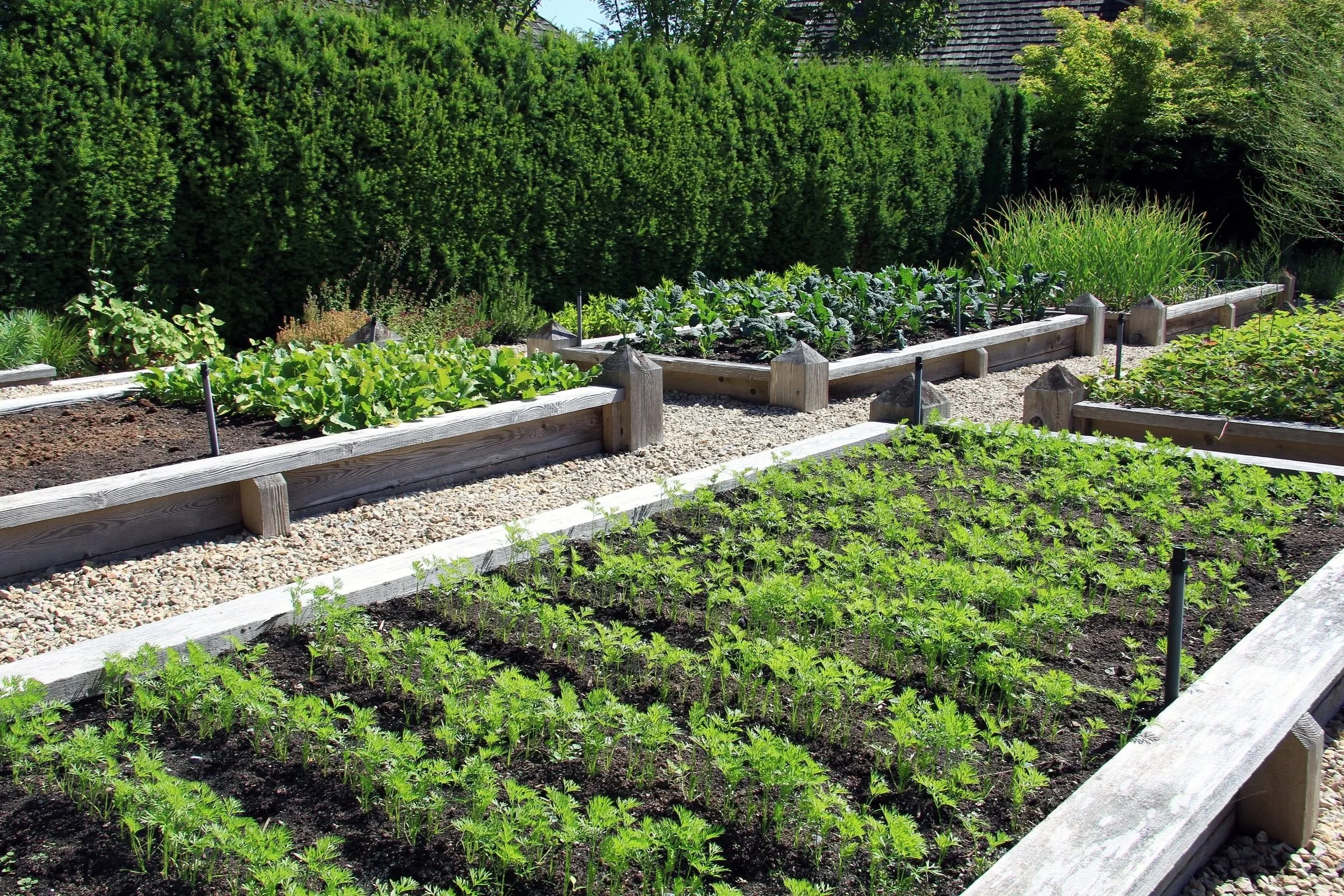
This guide explores how productive kitchen gardens are designed, how soil and planting systems are managed, and how traditional kitchen gardens can be developed within gardens across Buckinghamshire and the Chilterns.
You may also find this guide helpful: → Fruit Tree Care in Buckinghamshire and the Chilterns
Kitchen gardens have long been part of traditional gardens across Buckinghamshire and the Chilterns. Many historic properties throughout the region once maintained dedicated areas for growing vegetables, herbs and soft fruit, often arranged within carefully structured layouts that combined productivity with visual order.
Although large estate kitchen gardens are less common today, the principles behind them remain highly relevant. Modern kitchen gardens often combine raised beds, fruit trees and organised planting areas that allow seasonal produce to be grown while maintaining a coherent garden structure. When designed thoughtfully, these spaces can provide fresh harvests throughout much of the year while remaining manageable within the natural rhythm of the gardening seasons.
The sections below explore the principles behind successful kitchen gardens, including layout design, soil structure, seasonal planting and the integration of fruit trees within productive garden systems.
Contents
• The Tradition of Kitchen Gardens
→ Learn more
• Principles of Kitchen Garden Layout
→ Learn more
• Raised Bed Systems and Garden Structure
→ Learn more
• Soil Structure and Fertility
→ Learn more
• Seasonal Crop Planning
→ Learn more
• Integrating Fruit Trees into Kitchen Gardens
→ Learn more
• Irrigation and Water Management
→ Learn more
• Long-Term Kitchen Garden Stewardship
→ Learn more
• When to Bring in a Specialist
→ Learn more
The Tradition of Kitchen Gardens
Kitchen gardens have been an important feature of British gardens for centuries. Across Buckinghamshire and the Chilterns, many country houses and historic estates once maintained dedicated productive gardens that supplied households with vegetables, herbs, soft fruits and orchard produce.
Unlike informal vegetable plots, traditional kitchen gardens were carefully organised spaces. Beds were arranged within a structured layout, with clearly defined paths allowing gardeners to move efficiently through the growing areas.
These gardens typically combined several productive elements within a single space, including:
vegetable growing beds arranged within geometric layouts
trained fruit trees positioned along walls or boundaries
soft fruit planting areas such as currants or raspberries
herb beds located close to the kitchen or main garden paths
Many historic kitchen gardens also made extensive use of trained fruit tree systems, such as espaliers and fan-trained trees, which allowed fruit production to be integrated into the structure of the garden itself.
Although the large walled kitchen gardens once associated with estates are now less common, the principles behind them remain highly relevant. A well-designed kitchen garden combines productive planting with clear spatial organisation, allowing the garden to function efficiently while still maintaining a visually balanced appearance.
Today, many homeowners across Buckinghamshire and the Chilterns are rediscovering the value of kitchen gardens as part of a broader productive garden landscape, often integrating them alongside fruit trees, small orchards and traditional garden planting.
Principles of Kitchen Garden Layout
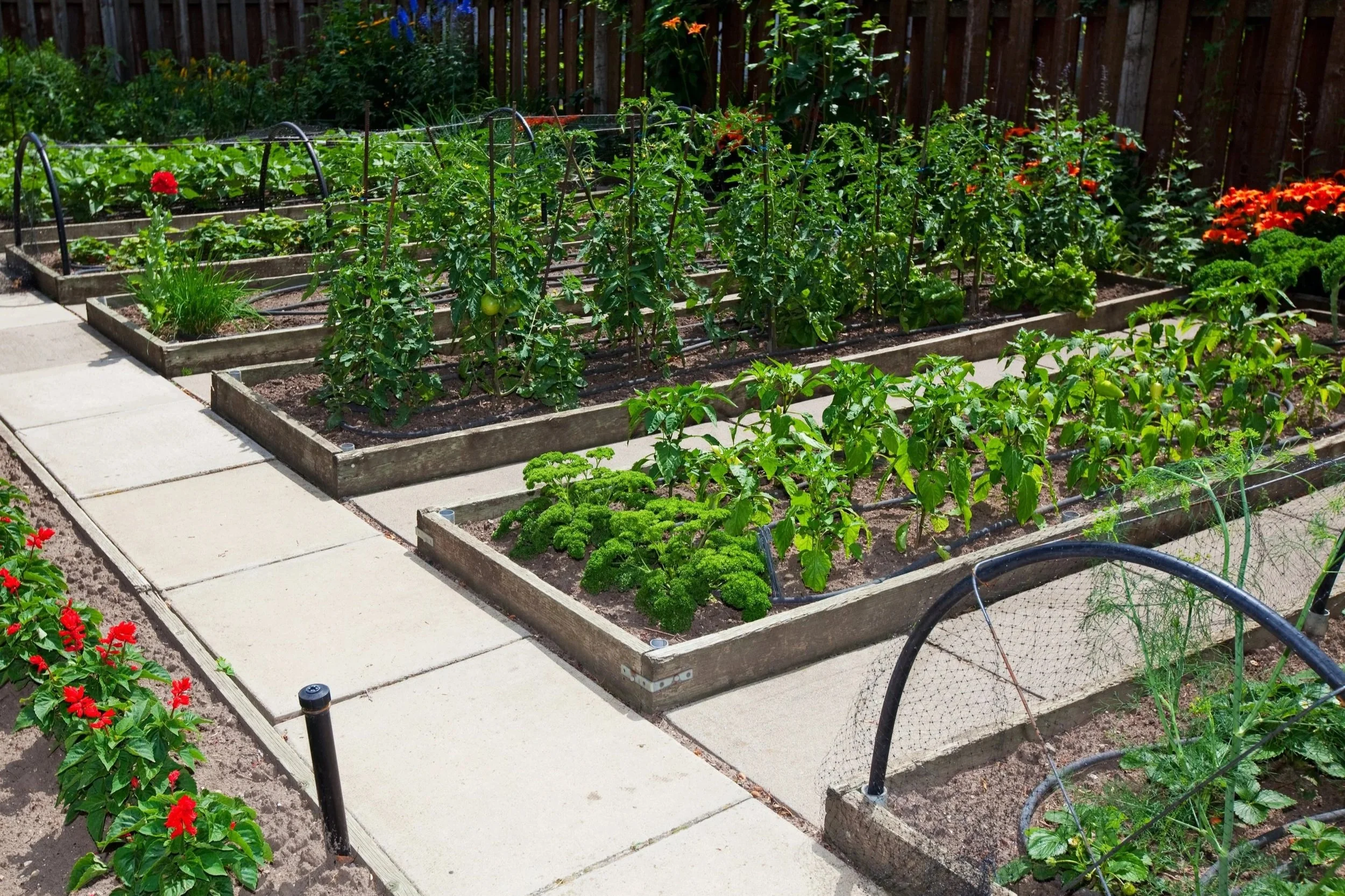
A well-designed kitchen garden begins with a clear and practical layout. While the purpose of the space is to grow food, the most successful kitchen gardens are organised so that planting areas, paths and structures work together as part of the wider garden.
Traditional kitchen gardens were typically arranged within a simple geometric framework of beds and pathways. This structure allowed gardeners to move easily through the space while keeping planting areas orderly and accessible.
One of the most important considerations is comfortable access to planting areas. Beds should be sized so that crops can be reached from the surrounding paths without stepping on the soil, which helps preserve soil structure and prevents unnecessary compaction.
The orientation of the beds is also important. Good sunlight exposure allows crops to develop evenly throughout the growing season, while careful positioning of taller plants or structures helps prevent excessive shading across the garden.
In many gardens across Buckinghamshire and the Chilterns, kitchen gardens are integrated into the wider landscape rather than standing alone. Productive beds may sit alongside lawns, borders or fruit trees, creating a garden that combines structure, productivity and visual balance.
Raised Bed Systems and Garden Structure
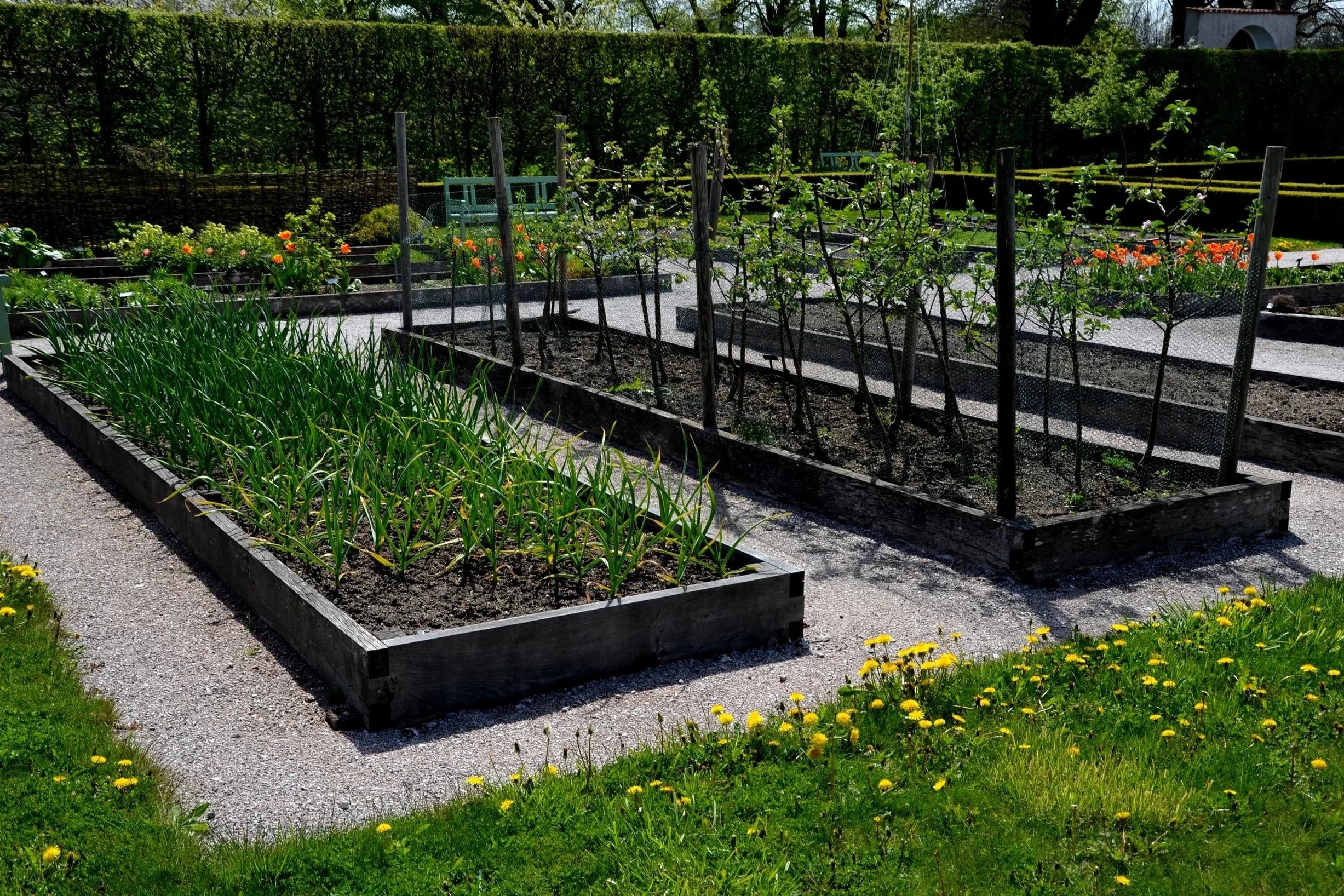
Raised beds are a common feature of many kitchen gardens because they create a clear and organised framework for productive planting. Rather than planting directly into open ground, raised beds define the growing areas and separate them from the pathways used to access the garden.
One of the main advantages of raised beds is the ability to gradually improve soil structure within the growing space. In many Buckinghamshire gardens, natural soil conditions can vary considerably, particularly where heavier clay soils are present. Raised beds allow organic material to be incorporated over time, creating a growing environment that supports healthy root development.
Raised beds also help maintain the visual structure of the kitchen garden. By dividing the garden into clearly defined planting areas, crops can be organised and rotated seasonally while the overall layout of the garden remains balanced and easy to manage.
When designed carefully, raised beds form the structural backbone of the kitchen garden, allowing soil health, crop rotation and seasonal planting to develop within a clear and orderly growing system.
Soil Structure and Fertility
Healthy soil is the foundation of any successful kitchen garden. While raised beds and garden layout provide the structure of the space, it is the condition of the soil that ultimately determines how well crops grow over time.
Across Buckinghamshire and the Chilterns, natural soil conditions can vary widely. Some gardens contain heavier clay soils that hold moisture for long periods, while others may drain more freely. A productive kitchen garden benefits from soil that is open in structure, rich in organic matter and capable of retaining moisture while still allowing air to circulate around plant roots.
Over time, soil fertility is typically improved through the gradual addition of organic material. Many kitchen gardens develop healthy soil conditions through regular seasonal inputs such as:
garden compost produced from plant material and kitchen waste
well-rotted manure incorporated during winter bed preparation
organic mulches that protect soil surfaces and add structure as they break down
These materials help build a soil environment that supports both plant roots and the beneficial organisms that contribute to long-term soil health.
Rather than relying on quick solutions, successful kitchen gardens usually improve gradually as the soil develops season by season. By treating the soil as a living system, gardeners can maintain a productive growing environment that continues to support crops year after year.
Seasonal Crop Planning
A productive kitchen garden develops through a seasonal rhythm rather than a series of isolated planting tasks. By planning crops carefully throughout the year, the garden can remain productive across multiple growing cycles while maintaining the organised structure of the beds.
Many kitchen gardens are managed through crop rotation, where different plant families move between beds over time. This approach helps maintain soil fertility while reducing the build-up of pests and diseases that can occur when the same crops are repeatedly grown in the same location.
A typical kitchen garden planting cycle may include crops such as:
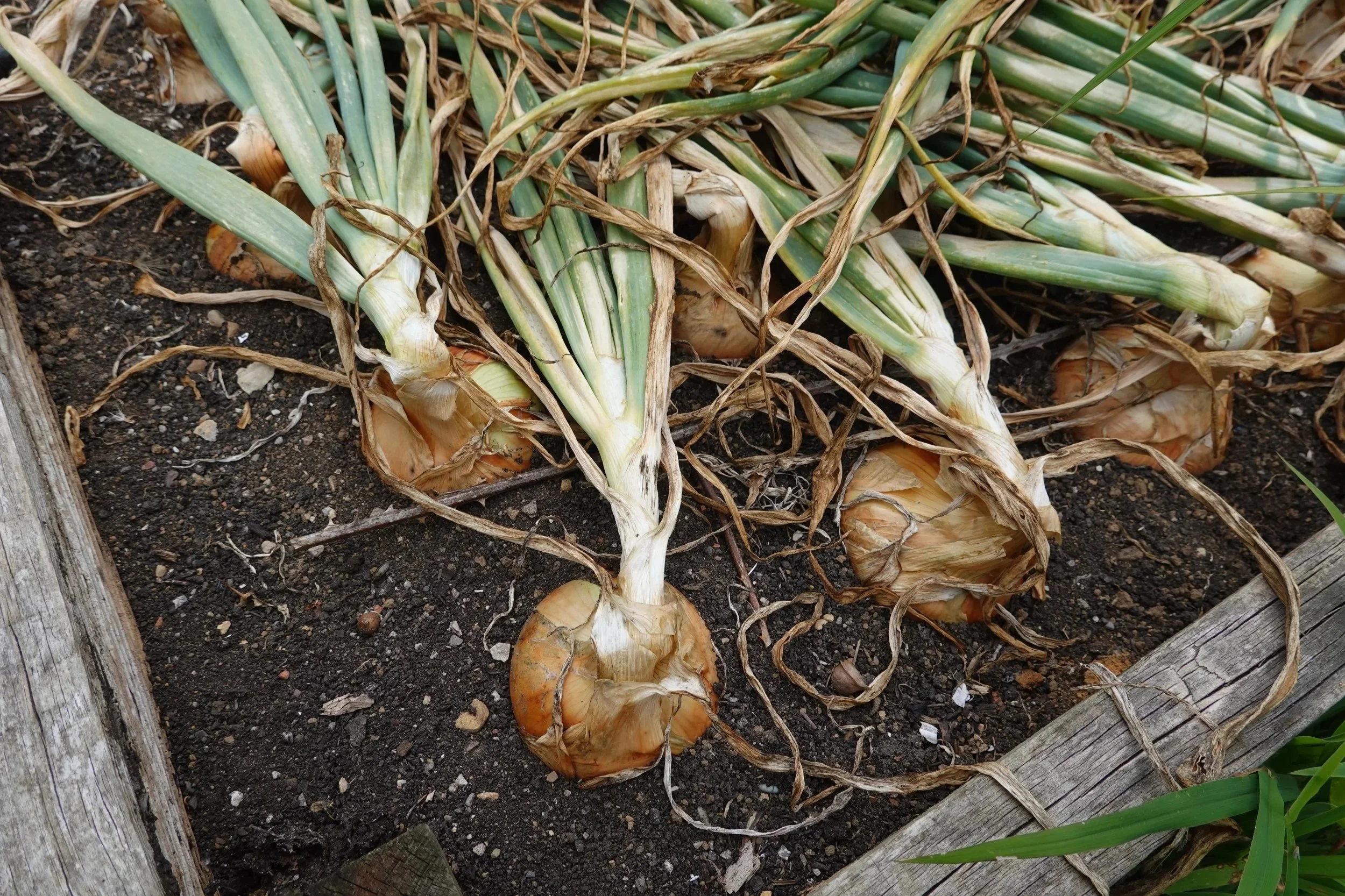
early season vegetables such as onions, carrots and leafy greens
summer crops including beans, courgettes and tomatoes
later plantings that extend productivity into autumn
As harvests are completed, beds can be prepared for the next planting cycle, allowing the garden to remain productive throughout much of the year.
In many Buckinghamshire gardens, seasonal planting is combined with fruit trees growing nearby or within the productive space. Where fruit trees are part of the garden structure, regular pruning and canopy management are important to ensure that light and air continue to reach the planting beds.
Professional guidance through services such as Fruit Tree Pruning or Orchard Restoration can help maintain the balance between productive planting areas and mature fruit trees within the garden.
Integrating Fruit Trees into Kitchen Gardens
Fruit trees have traditionally been an important part of many kitchen gardens. Rather than existing as separate orchards, fruit trees were often incorporated directly into productive garden spaces using trained forms that allowed them to grow alongside vegetable beds without overwhelming the layout of the garden.
One of the most effective ways to achieve this balance is through trained fruit tree systems such as espaliers, cordons and fan-trained trees. These forms allow fruit trees to remain compact while still producing reliable crops, and they can often be positioned along boundaries, walls or pathways without reducing the usable growing space of the garden.
When fruit trees are part of a kitchen garden environment, regular canopy management becomes important. Careful pruning helps control the size of the tree, maintain good light penetration and ensure that surrounding planting beds continue to receive sufficient sunlight throughout the growing season. Services such as Fruit Tree Pruning are often used to maintain this balance within established gardens.
In gardens where fruit trees have been neglected or allowed to grow without management for many years, more substantial structural work may be required to restore a productive balance between trees and growing space. In these situations, Orchard Restoration can help bring older fruit trees back into a manageable structure that works within the wider productive garden.
Where kitchen gardens and fruit trees are managed together as part of a long-term system, periodic guidance can also help maintain the relationship between seasonal planting and tree development. Ongoing support through Orchard & Kitchen Garden Stewardship can ensure that both elements of the garden continue to evolve in a balanced and productive way.
Irrigation and Water Management
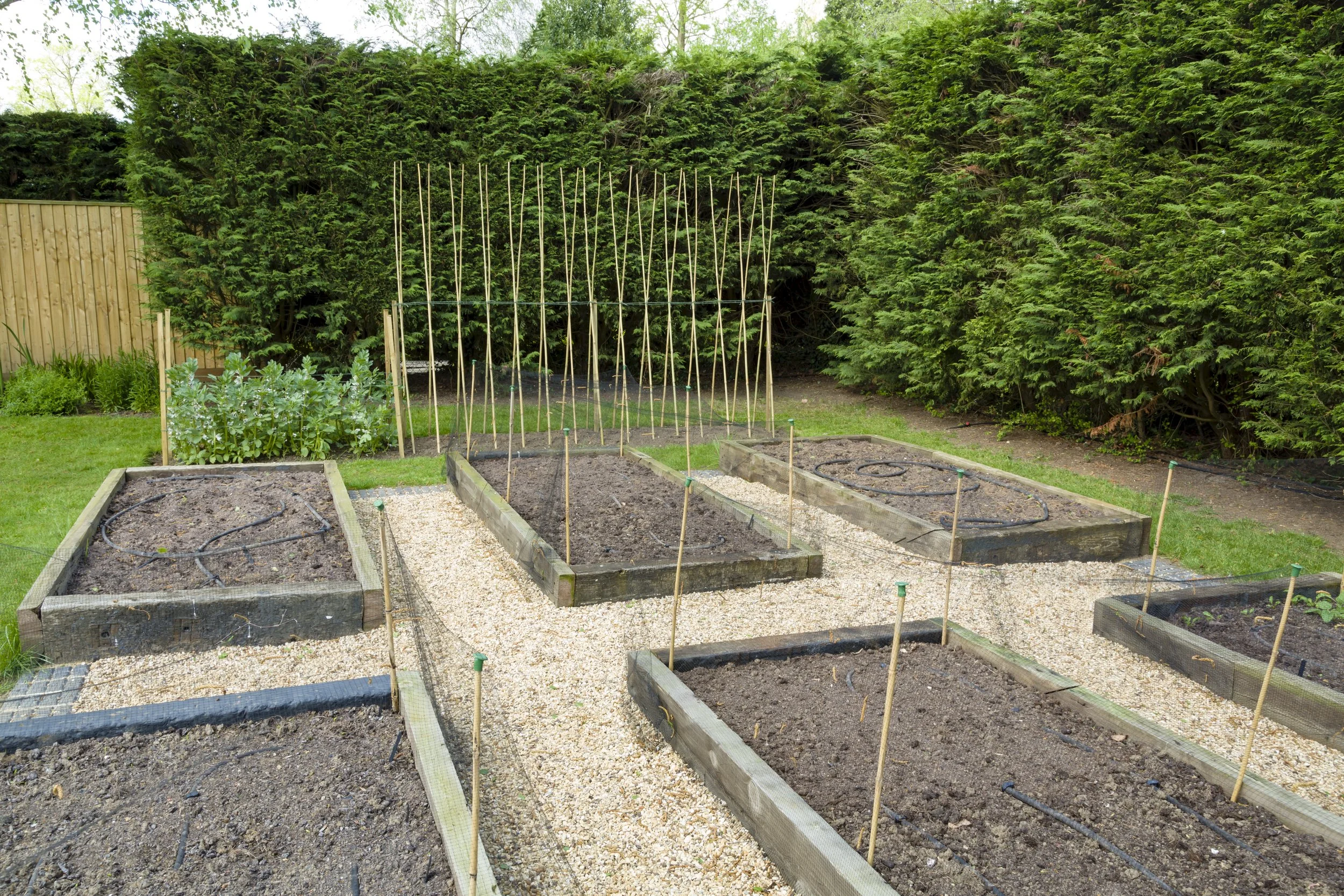
Reliable water management is an important part of maintaining a productive kitchen garden. While many crops can tolerate short periods of dry weather, consistent soil moisture supports healthy root development and helps crops grow steadily throughout the season.
Raised beds in particular tend to drain more freely than surrounding ground soil, which means they can dry out more quickly during warm summer weather. Careful watering helps maintain stable growing conditions while preventing sudden stress on young plants.
Many kitchen gardens benefit from simple irrigation systems that deliver water gradually and directly to the soil. Drip irrigation lines or porous hose systems can be particularly effective because they allow water to reach the root zone while reducing evaporation and unnecessary wetting of plant foliage.
Good water management also plays a role in disease prevention. When watering is applied thoughtfully at the base of plants rather than across leaves and stems, the risk of fungal problems developing within dense planting areas can be reduced. Where disease issues do begin to appear within a productive garden, a structured inspection through Pest & Disease Consultation can help identify underlying causes and recommend appropriate management strategies.
Over time, careful observation of how water moves through the soil helps gardeners develop a more balanced irrigation approach. By responding to seasonal weather patterns and the changing needs of different crops, kitchen gardens can remain productive while maintaining healthy soil conditions throughout the growing season.
Long-Term Kitchen Garden Stewardship
Kitchen gardens are living systems that develop gradually over time. While the initial design and installation create the framework of the garden, the long-term success of a productive space depends on how well it is managed across multiple growing seasons.
As the garden matures, soil conditions improve, planting patterns evolve and fruit trees begin to develop stronger structures. Periodic observation and adjustment help maintain a balance between seasonal crops, soil fertility and the wider structure of the garden.
Over time, kitchen gardens often benefit from occasional guidance in areas such as:
crop rotation and seasonal planting adjustments
soil fertility improvements and organic matter management
fruit tree structure and canopy balance within the garden
maintaining the overall organisation of raised beds and pathways
For many gardens, occasional visits through Orchard & Kitchen Garden Stewardship can help maintain this balance. These visits allow the garden to be assessed periodically while ensuring that planting systems, soil health and fruit tree structure continue to develop in a stable and productive direction.
Where kitchen gardens are part of a wider productive landscape that includes fruit trees or small orchards, stewardship visits can also help coordinate seasonal planting with ongoing work such as Fruit Tree Pruning or longer-term Orchard Restoration where required.
By approaching kitchen gardens as evolving systems rather than static installations, productive spaces can remain both organised and highly productive for many years.
When to Bring in a Specialist
Many kitchen gardens begin as small personal projects, but as productive spaces develop over time the structure of the garden can become more complex. Decisions about layout, soil preparation, planting systems and the integration of fruit trees can all influence how successful the garden becomes in the long term.
Specialist guidance can be particularly valuable when establishing a new kitchen garden within an existing landscape, where the productive area needs to sit comfortably alongside lawns, borders or mature fruit trees. Careful planning helps ensure that the structure of the garden supports both productivity and visual balance.
Older gardens can also present challenges where fruit trees have become overgrown or where planting areas have developed uneven soil conditions. In these situations, services such as Kitchen Garden Design, Fruit Tree Pruning, or Orchard Restorationcan help bring the productive elements of the garden back into a clear and manageable structure.
Where gardens already contain both vegetable growing areas and fruit trees, occasional visits through Orchard & Kitchen Garden Stewardship can also help ensure that the garden continues to develop in a balanced and productive way over time.
Thoughtfully planned kitchen gardens often become one of the most rewarding parts of a garden. With careful design, healthy soil and seasonal management, they can remain productive and visually harmonious for many years.
If you would like professional guidance on the kitchen garden design within your garden, you can learn more about the consultation process here: