
Fruit Tree Care in Buckinghamshire and the Chilterns
This guide explains how fruit trees develop, how their structure influences productivity, and how mature garden trees can be managed over time within Buckinghamshire and the Chilterns.
You may also find this guide helpful: → Kitchen Gardens in Buckinghamshire and the Chilterns
Fruit trees are a defining feature of many gardens across Buckinghamshire and the Chilterns. Mature apple, pear and plum trees are commonly found in established properties, traditional kitchen gardens and small private orchards throughout the region, often having developed gradually over decades with little structured management. While these trees are resilient, long-term productivity depends on maintaining a balanced canopy structure that allows light into the inner branches and supports the renewal of healthy fruiting wood.
The Productive Garden Company provides specialist fruit tree pruning and orchard care for private homeowners across Buckinghamshire and the surrounding Chiltern villages, focusing on restoring structural balance within mature trees, guiding phased orchard restoration where necessary and supporting the long-term stewardship of productive garden landscapes.
The sections below explain the key principles behind fruit tree structure, pruning and long-term orchard management.
Contents
Fruit Trees Commonly Found in Buckinghamshire Gardens
Why Fruit Tree Structure Matters
The Natural Growth Behaviour of Fruit Trees
When Fruit Trees Should Be Pruned
Signs a Fruit Tree Needs Structural Pruning
Restoring Overgrown Fruit Trees
Traditional Trained Fruit Trees
Long-Term Orchard Stewardship
When to Bring in a Specialist
Fruit Trees Commonly Found in Buckinghamshire Gardens
Many gardens across Buckinghamshire contain a mixture of traditional fruit tree species that have adapted well to the region’s climate and soils. These trees are frequently found in both free-standing orchard forms and trained systems integrated into garden walls and kitchen garden layouts.
Apple Trees
Apple trees are the most common fruit trees in the region. Mature apple trees can remain productive for many decades when their canopy structure is maintained through periodic structural pruning.
Over time, unmanaged apple trees often develop dense upper canopies that reduce light penetration within the inner branches. Selective pruning helps restore balance by encouraging the development of well-spaced fruiting wood throughout the tree.
For properties with mature apple trees that have become dense or overly tall, careful fruit tree pruning can gradually restore a manageable canopy while maintaining long-term tree health.
Pear Trees
Pear trees are also widely found in established Buckinghamshire gardens. Compared with apples, pears tend to produce more upright growth and can become tall if left unmanaged for long periods.
Structural pruning often focuses on managing scaffold branch angles and maintaining good spacing between branches so that the canopy remains open and productive.
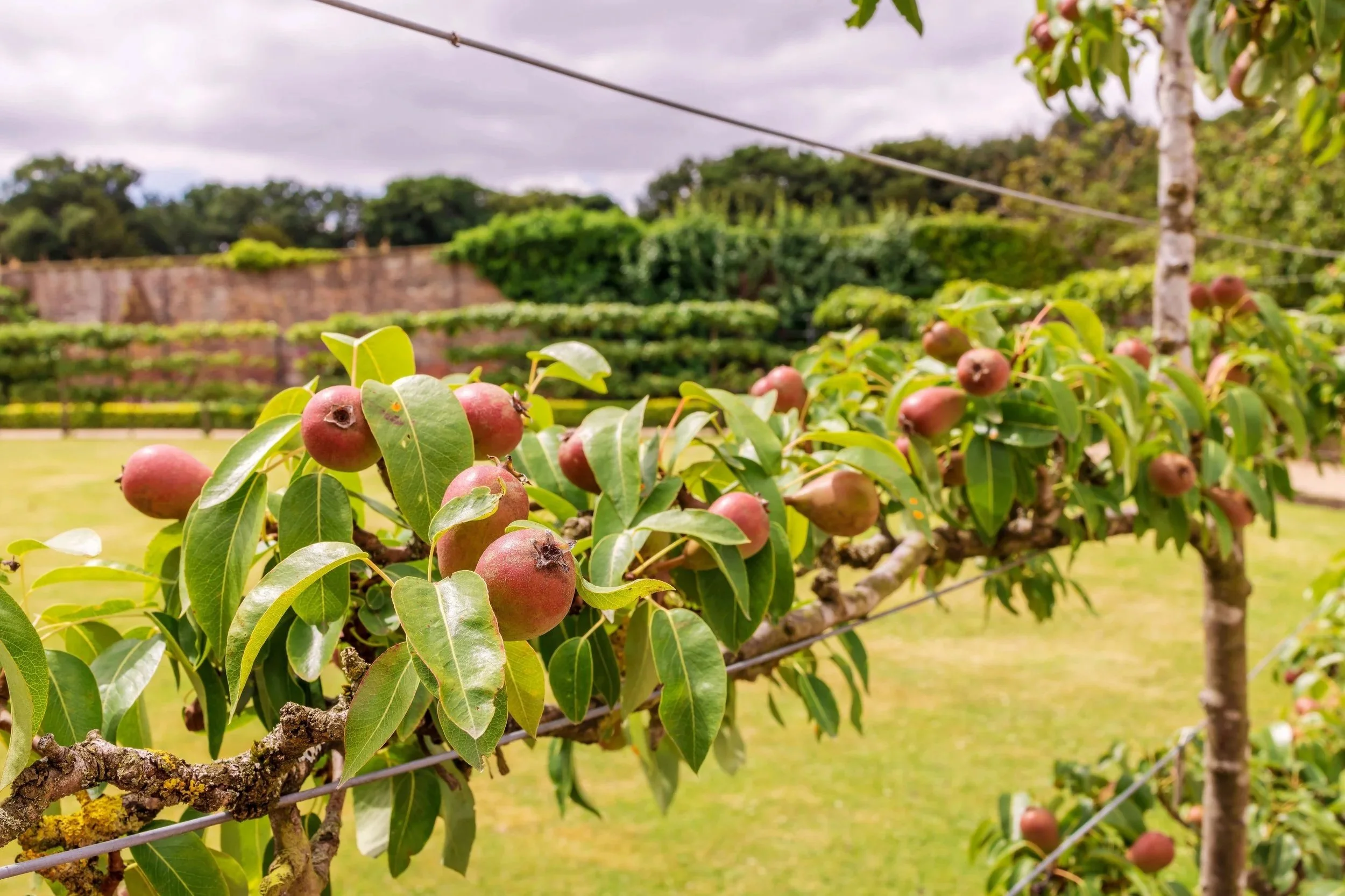
Pear trees are also commonly trained into traditional forms such as espalier systems along walls and garden boundaries.
Plum Trees and Gages
Plums, damsons and gages are common in older gardens and small orchards. These trees require a slightly different approach to pruning because they are more sensitive to certain diseases if pruned during the dormant winter season.
Management of stone fruit trees often focuses on maintaining a balanced canopy through lighter seasonal pruning while preserving the natural architecture of the tree.
Why Fruit Tree Structure Matters
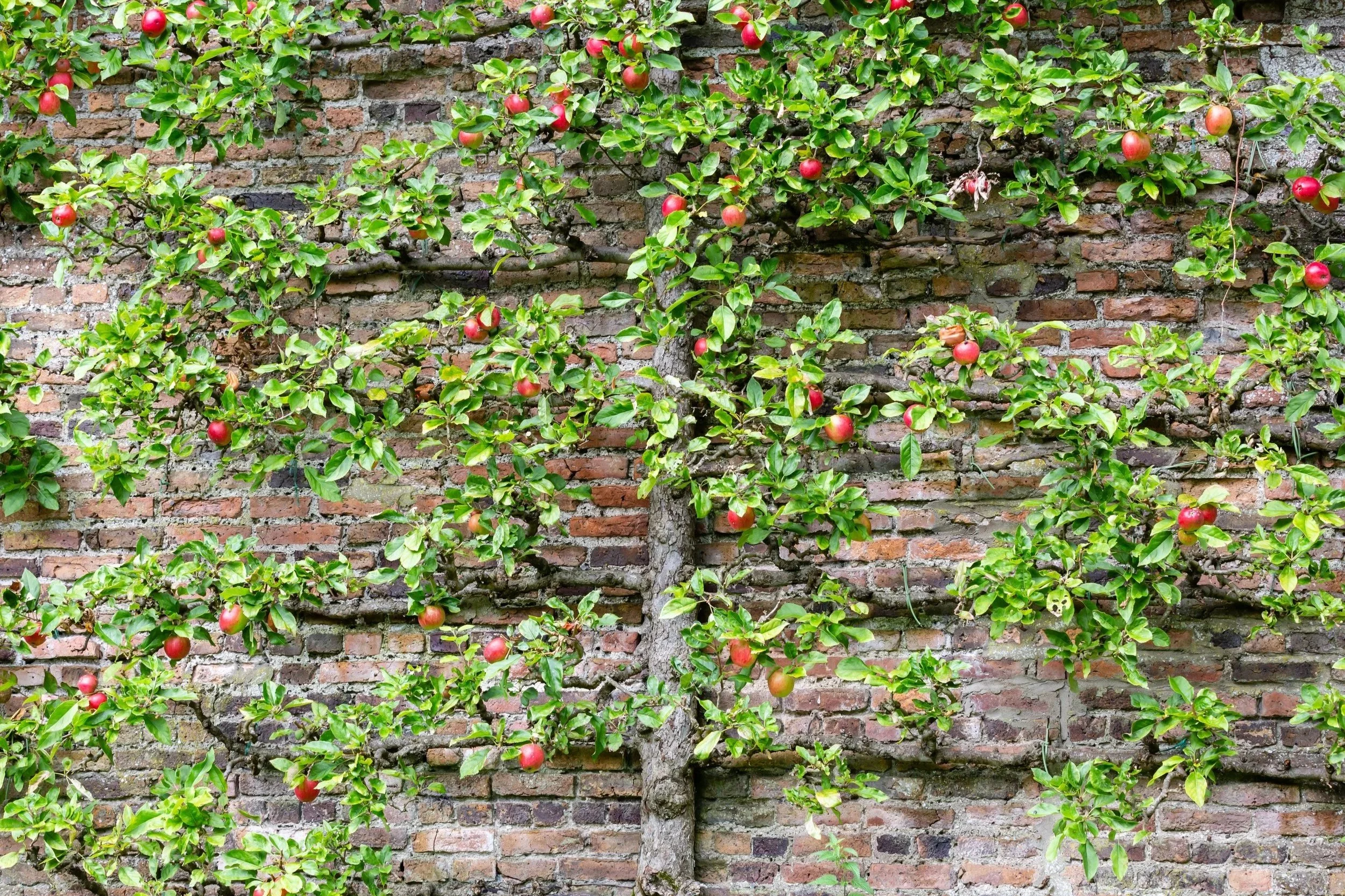
The long-term productivity of a fruit tree depends heavily on the structure of its canopy. In healthy fruit trees, scaffold branches are arranged so that light can reach much of the canopy and air can circulate freely between branches.
Over time, many mature garden fruit trees become increasingly dense as new shoots compete for space within the canopy. When light is blocked from reaching inner branches, fruiting wood can decline and the tree’s productive capacity gradually reduces.
Structural pruning focuses on restoring the underlying architecture of the tree rather than simply reducing its size. By selectively removing congested growth and maintaining well-spaced scaffold branches, the canopy can regain balance and continue producing high-quality fruit.
This form of structural management is often carried out as part of an ongoing orchard stewardship approach where mature fruit trees are gradually refined over time rather than heavily cut back in a single season.
The Natural Growth Behaviour of Fruit Trees
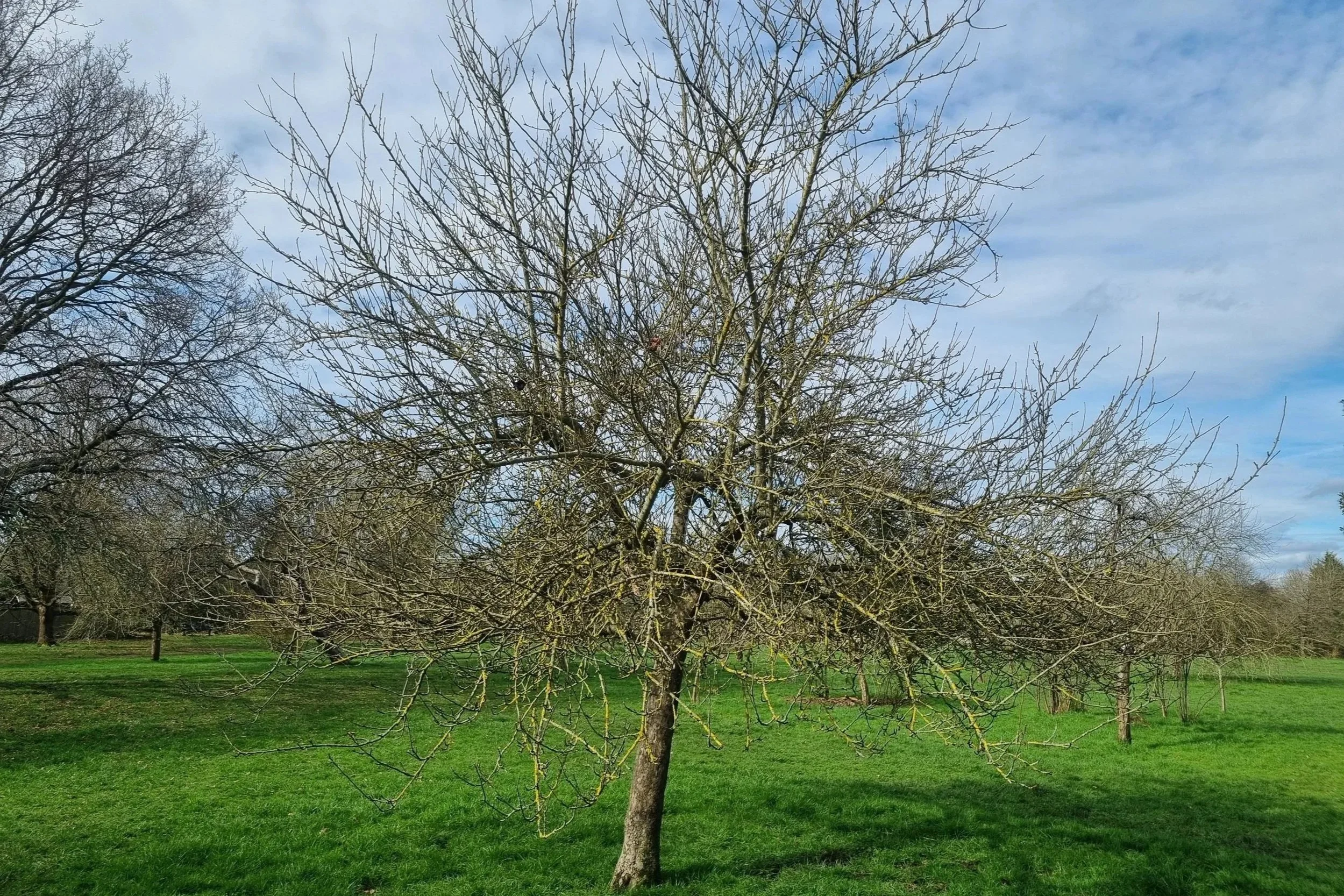
Fruit trees naturally direct much of their growth towards the upper portions of the canopy. This growth pattern is influenced by the tree’s hormonal structure and the principle often referred to as apical dominance, where the highest buds tend to produce the most vigorous shoots.
Without occasional management, this natural behaviour can lead to tall trees with dense upper canopies and shaded lower branches. As light becomes limited in the interior of the tree, productive fruiting wood may gradually decline.
Thoughtful pruning works with the tree’s natural growth patterns rather than against them. By managing branch angles, encouraging balanced scaffold development and periodically renewing fruiting wood, the overall structure of the tree can remain productive and manageable for many years.
In gardens where fruit trees have been unmanaged for long periods, a phased orchard restoration programme can gradually correct structural imbalance while preserving the health and longevity of mature trees.
When Fruit Trees Should Be Pruned
Fruit trees benefit from periodic pruning throughout their life, but the timing and intensity of pruning depends on the species, the age of the tree, and the purpose of the work being carried out.
In most cases, pruning is used to maintain the structure of the canopy, manage the vigour of the tree, and encourage the renewal of healthy fruiting wood. For many mature garden fruit trees, pruning is carried out as part of a longer-term management strategy rather than as a one-off intervention.
Winter Pruning
Winter pruning is typically carried out while the tree is dormant. During this period the structure of the canopy is easier to observe because the branches are not obscured by leaves.
Dormant pruning is commonly used for:
structural correction
managing scaffold branch spacing
reducing canopy congestion
restoring balance within mature apple and pear trees
Where trees have become overly dense or have been unmanaged for many years, winter pruning may form part of a phased fruit tree pruning programme that gradually restores the structure of the canopy over several seasons.
Summer Pruning
Summer pruning is often used to manage vigorous growth and maintain the shape of trained fruit trees.
This type of pruning is particularly useful for:
espalier trees
cordon systems
fan-trained fruit trees
young trees being guided into a particular structure
By selectively shortening vigorous new shoots during the growing season, summer pruning helps direct the tree’s energy toward fruiting rather than excessive vegetative growth.
Species Considerations
Different fruit tree species respond differently to pruning. Apples and pears tolerate dormant winter pruning well, whereas many stone fruit trees such as plums and gages are often pruned more cautiously to reduce disease risk.
For gardens containing several mature fruit trees or small orchards, pruning is often combined with broader orchard stewardship planning so that the long-term development of the trees can be guided over time rather than managed through heavy cutting in a single season.
Signs a Fruit Tree Needs Structural Pruning
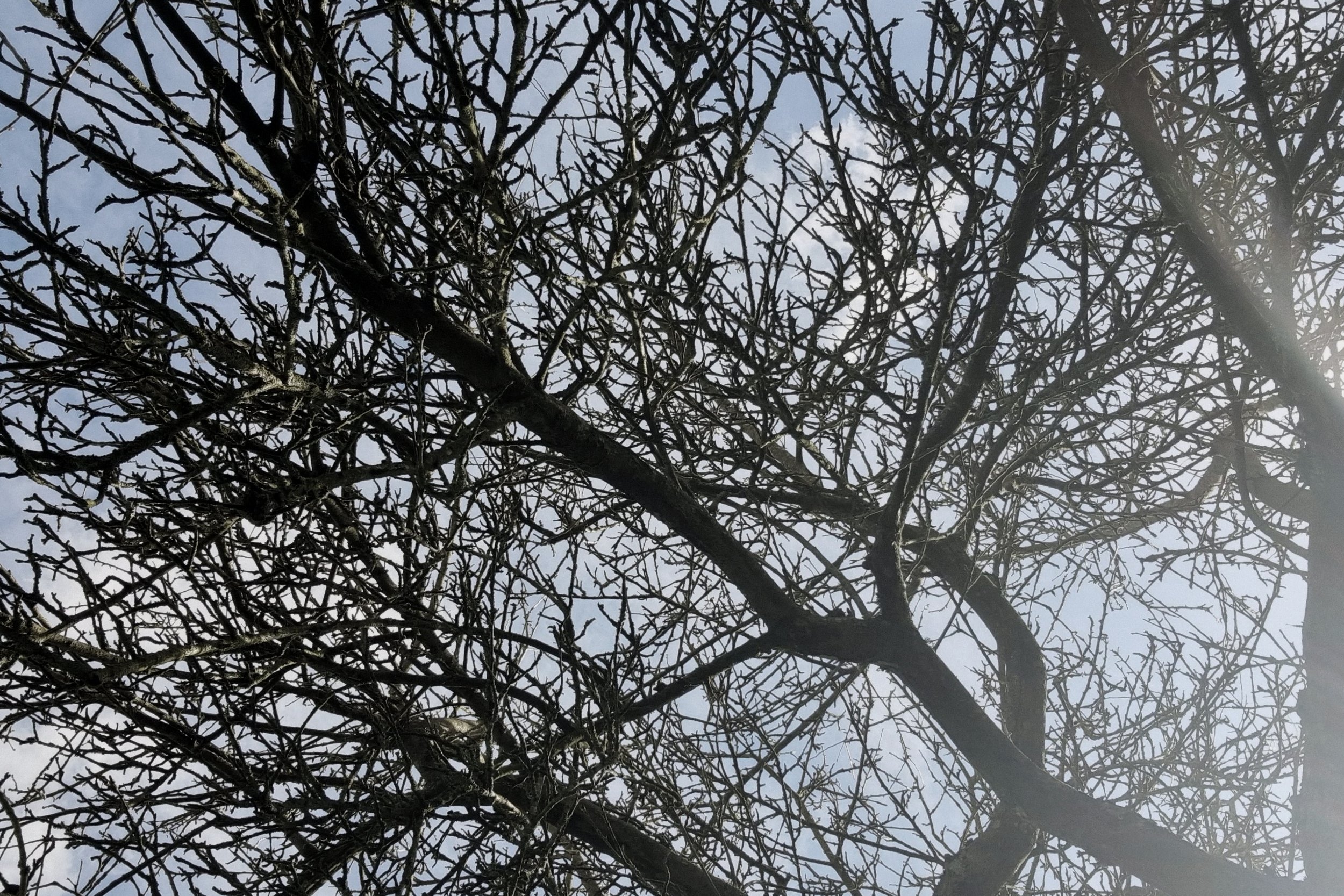
Many mature fruit trees continue to grow for years with little or no structural management. Over time this can lead to imbalances within the canopy that gradually reduce fruit quality, increase disease pressure, or make the tree difficult to manage.
While fruit trees are generally resilient, certain structural symptoms often indicate that careful pruning or phased restoration may be beneficial.
Common signs that a fruit tree may benefit from structural pruning include:
dense canopy growth where branches overlap and restrict light penetration within the tree
crossing or rubbing branches that create friction points and potential wounds within the canopy
excessively tall growth where the upper canopy becomes difficult to reach for harvesting or pruning
heavy shading of inner branches, which can lead to declining fruiting wood within the interior of the tree
large amounts of vigorous upright growth, sometimes referred to as water shoots, developing after years without structural guidance.
reduced fruit size or declining productivity, often caused by congestion within the canopy
In many gardens across Buckinghamshire and the Chilterns, fruit trees have been left unmanaged for long periods and may require gradual structural correction rather than heavy cutting in a single season.
Careful fruit tree pruning focuses on restoring balance within the canopy while preserving the long-term health of the tree. In situations where trees have become heavily overgrown or structurally imbalanced, a phased orchard restoration approach may be recommended so that the canopy can be corrected gradually over several seasons.
Restoring Overgrown Fruit Trees
Many gardens across Buckinghamshire contain fruit trees that have been left unmanaged for long periods. These trees may have developed tall upper canopies, dense internal growth and a loss of productive fruiting wood in the lower branches.
While it can be tempting to reduce an overgrown fruit tree aggressively in a single season, heavy cutting often creates new problems. Large reductions can stimulate excessive vigorous growth, weaken the natural structure of the tree and in some cases reduce fruit production for several years.
For this reason, mature trees that have become overgrown are usually best restored gradually through a phased orchard restoration approach.
Rather than attempting to correct every structural issue at once, the restoration process focuses on guiding the tree back toward a balanced canopy over several pruning seasons.
A typical restoration process may involve:
gradually reducing excessive height so that the tree becomes manageable again
removing congested or poorly positioned branches to allow light into the canopy
restoring clear scaffold branch structure
encouraging the development of new fruiting wood within the interior of the tree
improving airflow through the canopy to reduce disease pressure
Each season of pruning builds on the previous one, allowing the tree to adjust gradually while maintaining its long-term health and stability.
Where gardens contain several mature fruit trees or small orchards, restoration work is often integrated into a broader programme of orchard stewardship, allowing the trees to be managed carefully over time rather than treated as isolated one-off pruning jobs.
In some cases, restoration work also presents an opportunity to improve the wider orchard layout by introducing replacement trees or extending the productive planting area through thoughtful orchard establishment planning.
Traditional Trained Fruit Trees
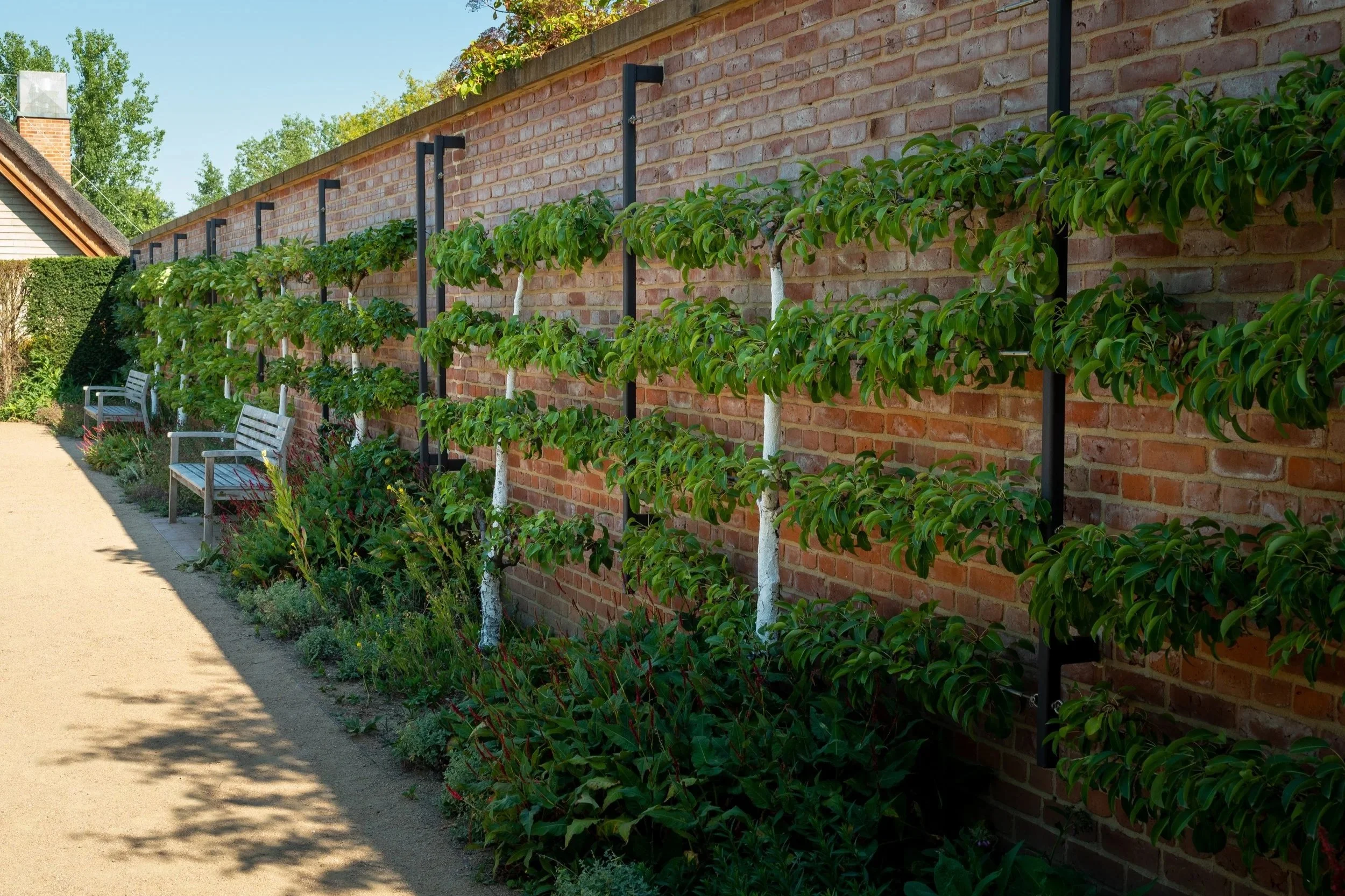
In many established gardens across Buckinghamshire and the Chilterns, fruit trees are not only grown as free-standing orchard trees but are also trained into traditional forms that integrate closely with the structure of the garden.
These trained systems were historically used in kitchen gardens and walled gardens to maximise productivity while keeping trees compact and manageable. Today they remain one of the most elegant ways to grow fruit within a structured garden layout.
Several traditional training systems are commonly found in mature gardens.
This system allows fruit trees to receive excellent light exposure while remaining relatively compact, making espalier an ideal solution for garden boundaries, walls and formal kitchen garden designs.
Fan-Trained Trees
Fan-trained trees are often used for species such as peaches, nectarines and plums. The branches spread outward from the base of the tree in a fan-like structure, allowing sunlight to reach much of the canopy.
This system works particularly well against south-facing walls where additional warmth can help improve fruit development.
Cordons
Cordon trees are trained along a single angled or vertical stem with short fruiting spurs developing along the trunk. These trees require very little space and are often used in rows within traditional kitchen gardens.
Because cordons remain compact, they can be planted relatively close together and are well suited to highly productive small garden spaces.
Across many Buckinghamshire properties, trained fruit trees form an important part of traditional kitchen garden design, where fruit production is integrated with vegetable growing areas and structured garden layouts.
Maintaining these trained systems requires careful seasonal management, and in some gardens they are maintained as part of a broader programme of orchard stewardship to ensure that the structure and productivity of the trees remain balanced over time.
Espalier
Espalier trees are trained along horizontal tiers, typically against a wall, fence or supporting framework. Branches are carefully guided along wires so that the tree develops a flat, structured form.
Long-Term Orchard Stewardship
Fruit trees are long-lived plants that often remain productive for many decades. While occasional pruning can help correct specific structural issues, the long-term health and productivity of mature fruit trees is usually best supported through thoughtful seasonal management.
In many gardens across Buckinghamshire and the Chilterns, fruit trees have developed gradually over many years without a clear management strategy. As a result, trees may become increasingly dense, overly vigorous, or difficult to harvest safely.
Rather than approaching fruit trees as isolated pruning tasks, a more effective approach is to view them as part of a living system that evolves over time. This is the principle behind long-term orchard stewardship, where the structure and productivity of fruit trees are gradually guided through periodic observation and careful seasonal interventions.
Because fruit trees develop slowly over time, small adjustments carried out periodically often produce better long-term results than large interventions carried out infrequently.
For properties that contain several mature fruit trees, or where fruit trees form part of a kitchen garden or small orchard, this ongoing stewardship approach can help maintain productivity while preserving the natural character of the garden landscape.
Orchard stewardship often involves:
monitoring canopy development and overall tree health
carrying out periodic structural adjustments through fruit tree pruning
gradually improving the balance of mature trees through orchard restoration where required
encouraging the renewal of healthy fruiting wood within the canopy
managing trained fruit trees such as espaliers and cordons so that their structure remains clear and productive
advising on the integration of new planting through thoughtful orchard establishment
When to Bring in a Specialist
Many garden fruit trees can remain productive for decades with thoughtful care and occasional pruning. In some situations, however, specialist assessment can help establish a clear plan for the long-term development of the trees.
This is particularly helpful where trees have been unmanaged for many years, where the canopy structure has become difficult to interpret, or where several mature fruit trees need to be managed together within a garden or small orchard setting.
A structured assessment can help identify:
the current structural condition of the trees
whether phased fruit tree pruning or orchard restoration may be beneficial
how trained trees such as espaliers or cordons should be managed
opportunities for new planting through careful orchard establishment
whether a longer-term orchard stewardship approach may help guide the gradual improvement of the trees over time
Every garden is different, and fruit trees often develop in ways that reflect the history of how the garden has been managed. A thoughtful evaluation can help determine the most appropriate course of action while preserving the character and health of mature trees.
If you would like professional guidance on the care of fruit trees within your garden, you can learn more about the consultation process here: