
Kitchen Garden Installation
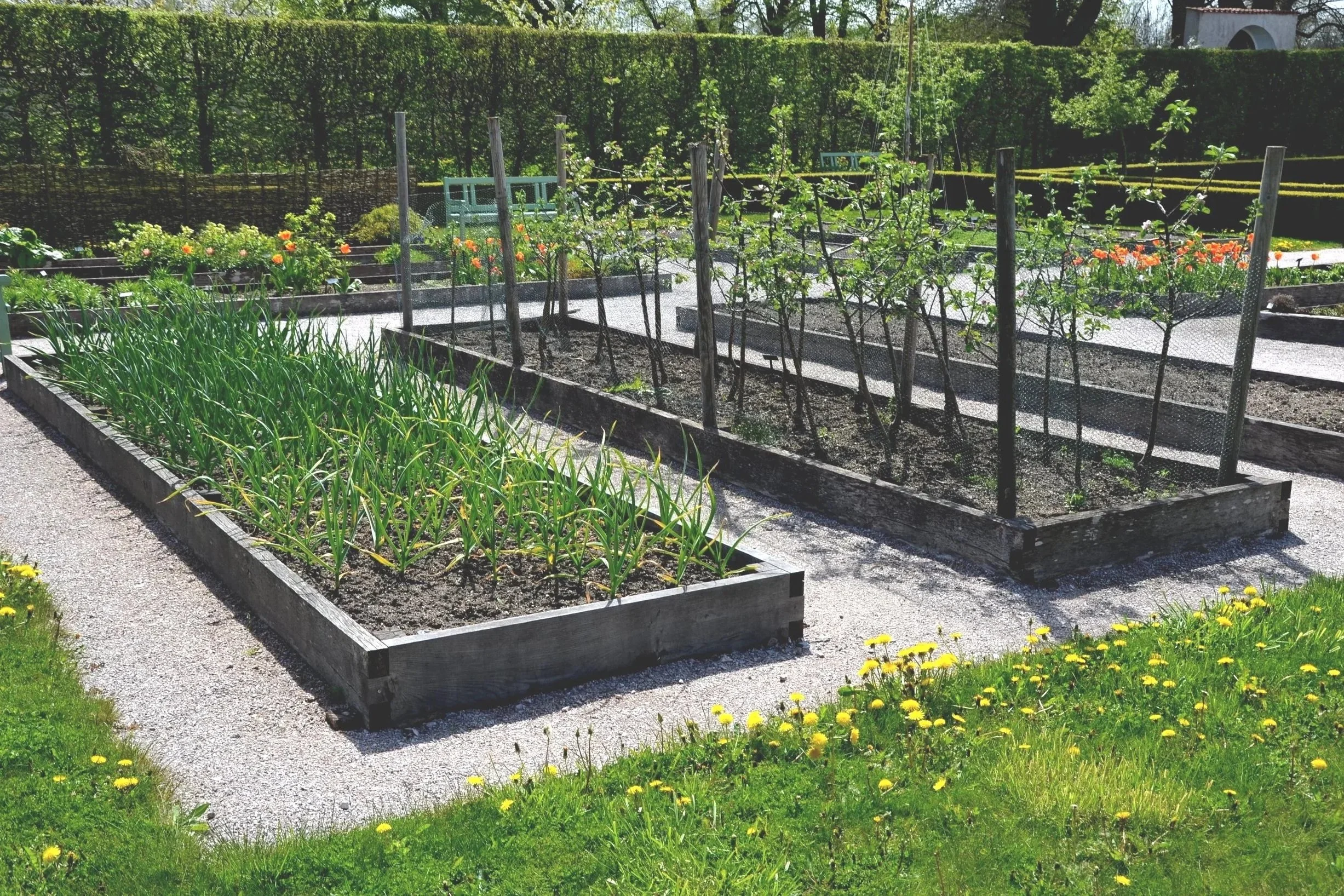
A well-designed kitchen garden requires careful implementation in order to function as a productive growing system. Bed placement, soil preparation, irrigation and access routes must be installed accurately so that the garden remains efficient and manageable over the long term.
The Productive Garden Company provides professional kitchen garden installation for private homes across Buckinghamshire and the Chilterns. Installation work follows an approved design framework so that the structure, soil conditions and layout support reliable seasonal production.
Rather than informal garden construction, the installation process focuses on establishing a coherent growing system that will function successfully for many years.
Implementing a Structured Kitchen Garden
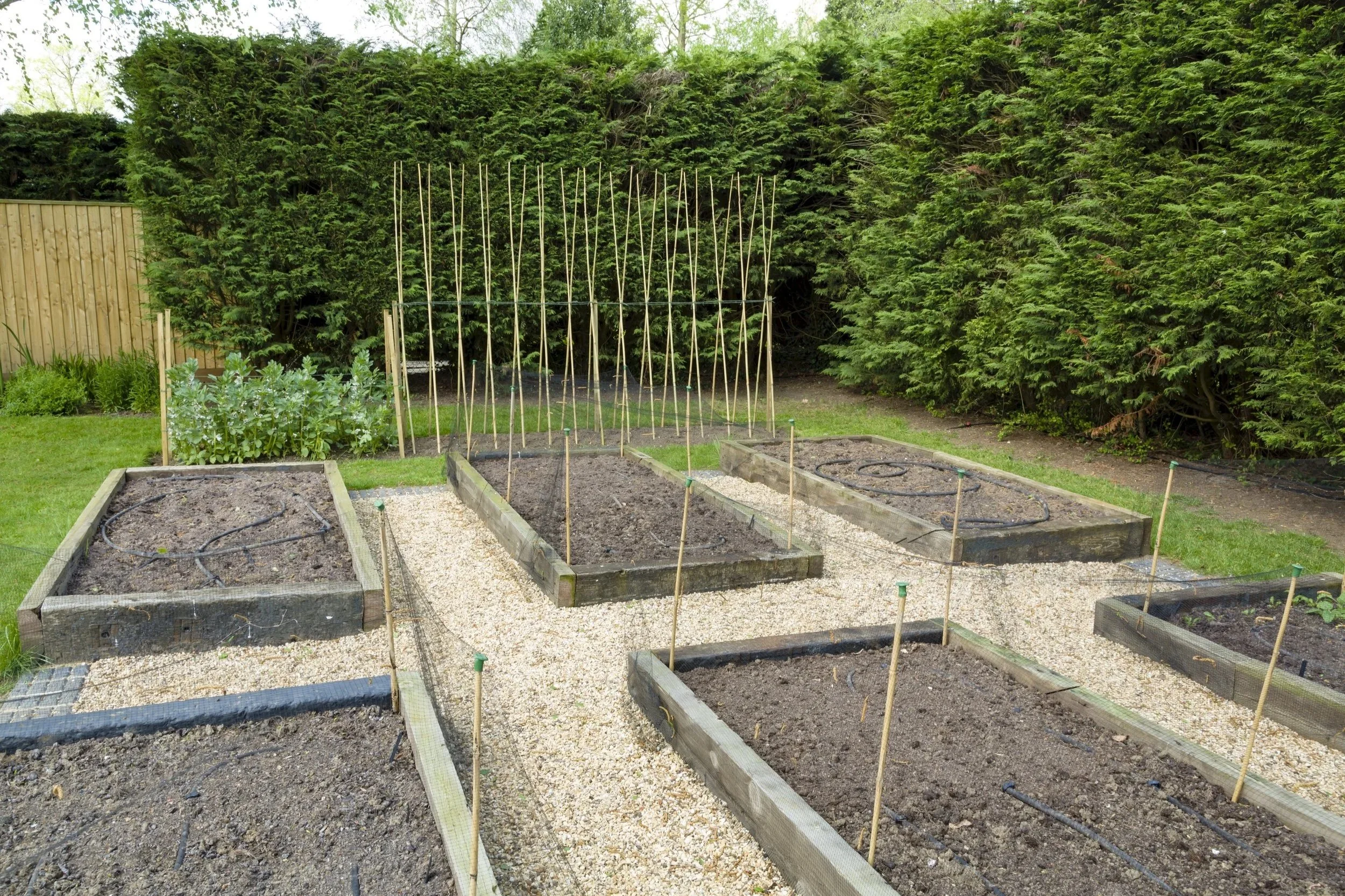
Kitchen garden installation begins by translating the design layout into a functioning physical space. Accurate positioning of beds, pathways and working areas ensures that the garden operates efficiently once planting begins.
Attention is given to access, orientation and workflow so that the garden can be maintained comfortably throughout the growing season.
Typical installation steps may include:
accurate positioning of beds and pathways
preparation of soil growing areas
installation of raised beds where required
irrigation planning and setup
compost system positioning
protective structures for crops
Each component contributes to the functioning of the whole garden. A kitchen garden performs best when its structural elements work together as a single organised system.
Raised Bed and Layout Installation
Raised beds provide a clear structural framework for many kitchen gardens. They improve soil control, accessibility and drainage while allowing crops to be organised efficiently.
However, raised beds must be positioned carefully so that access routes, bed spacing and planting areas remain balanced within the overall garden layout.
Installation may include:
marking and aligning bed positions
overseeing raised bed construction
preparing soil structure and organic matter levels
forming permanent access pathways
establishing consistent spacing between beds
When implemented correctly, raised beds create a durable structure that supports both productivity and ease of management.
Soil Preparation and Growing Conditions
Successful vegetable production depends heavily on soil structure and biological activity. During installation the growing areas are prepared so that crops can establish quickly and develop strong root systems.
Soil preparation may involve loosening compacted soil, improving drainage where necessary and incorporating organic material to increase fertility.
Typical preparation work may include:
soil loosening and structure improvement
incorporation of compost or organic amendments
preparation of growing beds
correction of drainage issues where identified
Healthy soil forms the foundation of the kitchen garden. Productive gardens rely on soil that is biologically active, well-structured and capable of supporting continuous crop rotation.
Irrigation and Garden Infrastructure
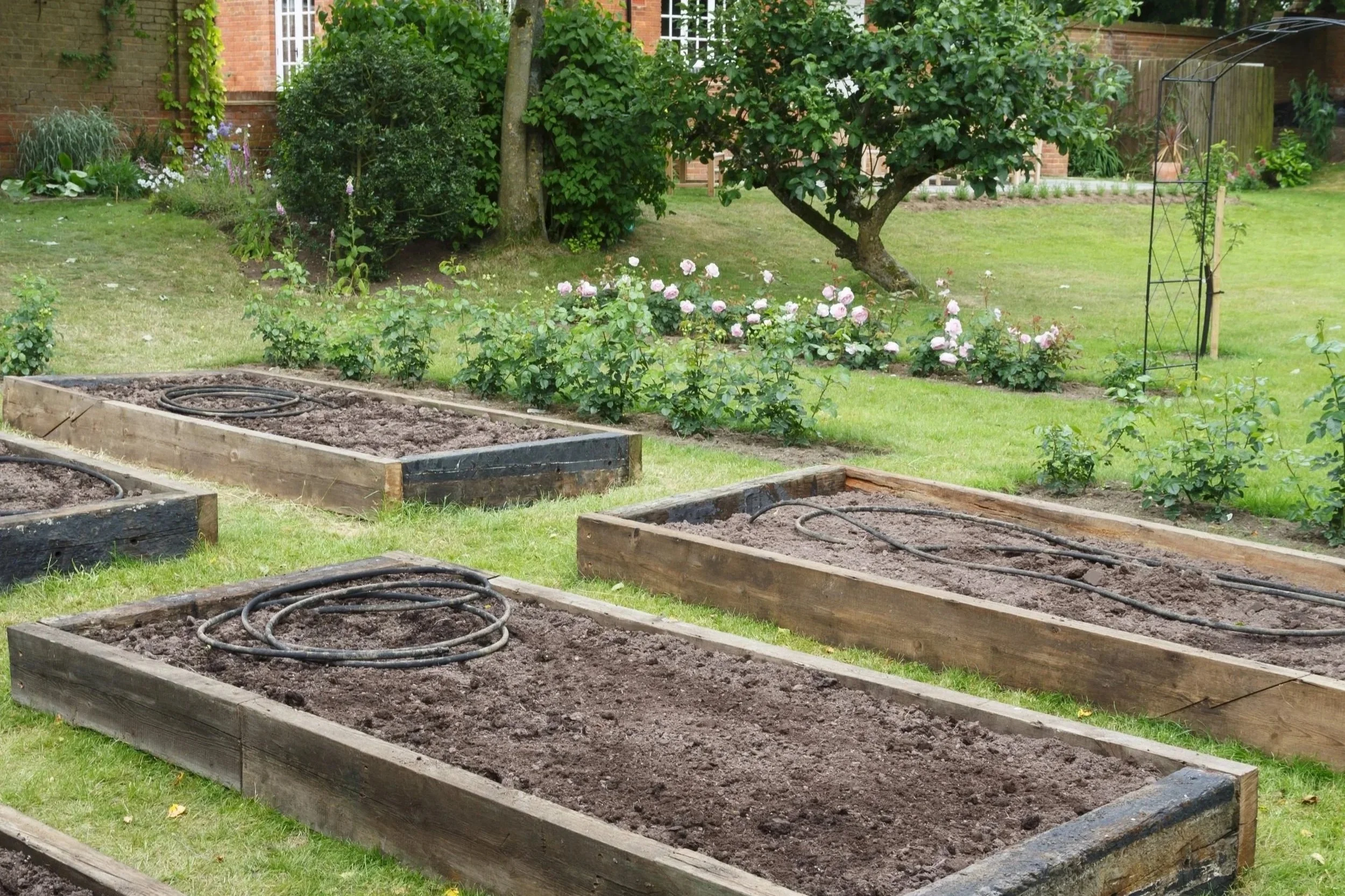
Where appropriate, kitchen garden installations may incorporate irrigation systems and supporting infrastructure to simplify long-term maintenance.
Water access, crop protection and climbing structures can all contribute to efficient seasonal management.
Infrastructure planning may include:
hose access and water supply positioning
drip irrigation layout
rainwater use where available
netting structures for crop protection
climbing supports and trellis systems
Carefully planned infrastructure reduces ongoing maintenance demands while improving crop reliability.
Establishing the First Growing Season
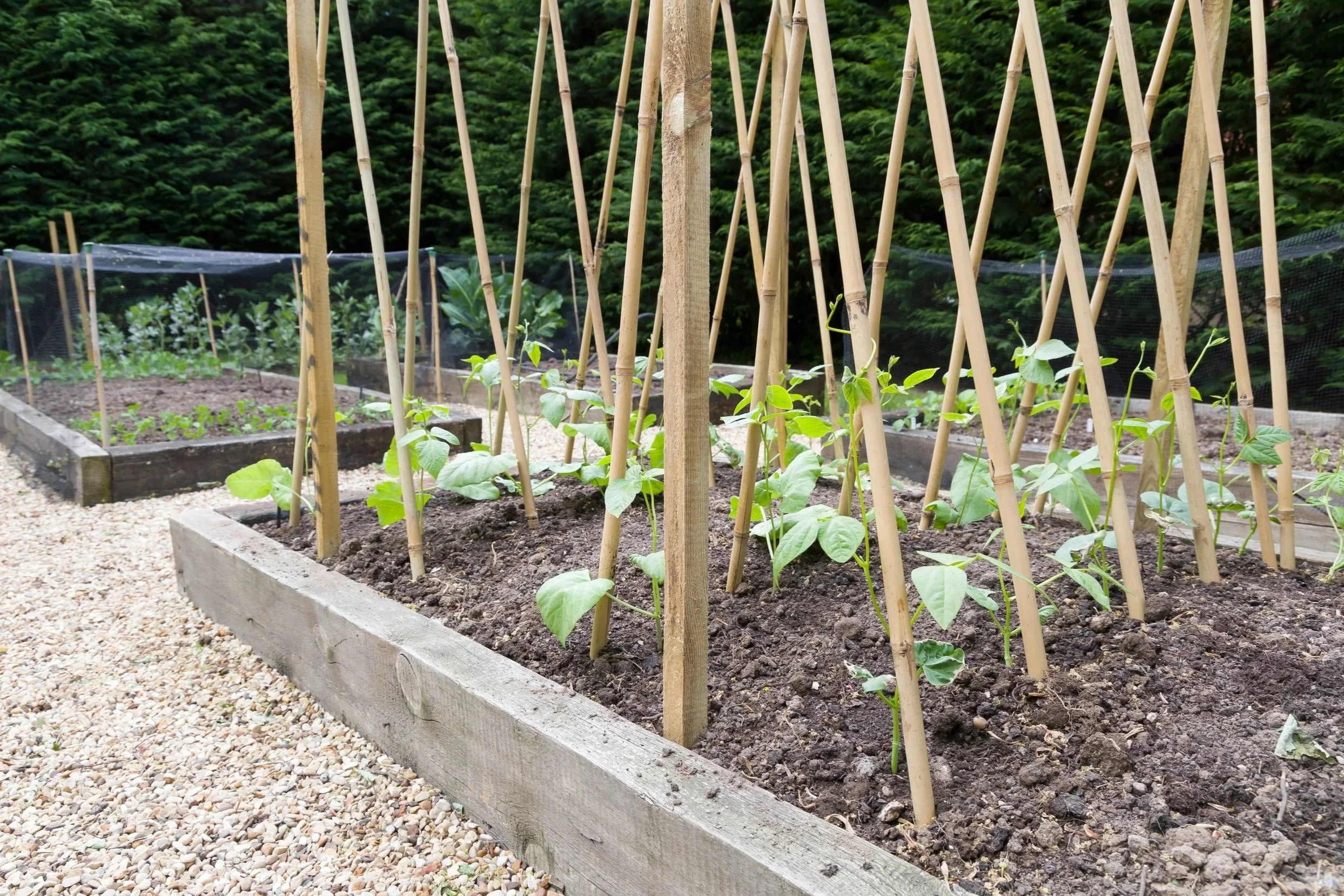
Where appropriate, kitchen garden installation may include the establishment of the first crop cycle. Beginning with an organised planting framework helps the garden develop in a structured way from the outset.
This may involve preparing beds for planting, selecting appropriate crops and establishing irrigation schedules for early growth.
Typical early establishment may include:
preparing beds for planting
selecting crops aligned with the rotation framework
planting or direct sowing
establishing irrigation schedules
Starting the garden with a clear structure allows the growing system to develop gradually across the season.
From Installation to Long-Term Productivity
Kitchen gardens evolve as crops are rotated, soil fertility improves and seasonal experience accumulates. Installation establishes the structural framework that allows this process to develop successfully.
Many clients choose to continue with periodic advisory visits following installation so that the growing system continues to develop in a balanced way.
Ongoing support may include:
seasonal advisory visits
crop rotation guidance
pest and disease monitoring
integration with orchard planting where fruit trees are present
With careful observation and gradual refinement, a well-installed kitchen garden can remain productive and manageable for many years.
Common Questions About Kitchen Garden Installation
How large does a kitchen garden need to be?
Kitchen gardens can be designed for a wide range of spaces. Even modest areas can support productive raised beds if the layout is planned carefully.
Do all kitchen gardens require raised beds?
Raised beds are common but not essential. Some gardens use ground-level beds where soil conditions allow. The installation approach depends on the site and design.
Can kitchen gardens be combined with fruit trees?
Yes. Many productive gardens combine vegetable growing areas with fruit trees or small orchards, creating a balanced and diverse productive landscape.
Kitchen Garden Installation Across Buckinghamshire and the Chilterns

The Productive Garden Company installs kitchen gardens for private homeowners across Buckinghamshire and the Chilterns.
Many properties within this part of England contain garden spaces well suited to productive cultivation, particularly where traditional orchards or larger garden areas are already present.
We regularly work in areas including:
Gerrards Cross
Beaconsfield
Amersham
Marlow
Great Missenden
The Chalfonts
Within these landscapes, well-planned kitchen gardens can become both productive and visually integrated parts of the wider garden.
If you would like to understand more about how kitchen gardens are planned, how productive layouts are structured, and how vegetable gardens can be integrated into the wider landscape of the garden, you can read our detailed guide:
→ Guide to Kitchen Gardens in Buckinghamshire and the Chilterns
We undertake a limited number of structured projects each year. Initial consultations establish alignment with our phased working model. We are not a general maintenance service.
Request an Initial Consultation
Initial consultations are offered to establish alignment with our structured approach. Most projects begin with a consultation to assess existing conditions and explore potential long-term development within the garden.
Learn more → Consultation Process